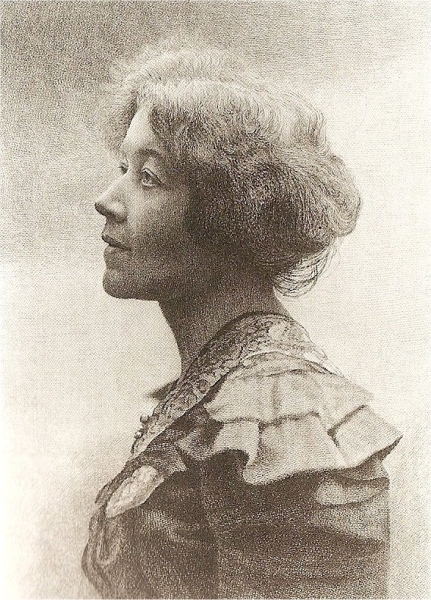
Education Outside the System
When Ricarda Huch came of age in the late nineteenth century, German universities did not admit women. Academic life was structured around male participation, male mentorship, and male institutional authority. A woman could be educated at home, privately cultivated, even admired—but not formally credentialed within the state’s intellectual apparatus.
Huch did what ambitious women of her generation sometimes had to do: she left Germany. She studied at the University of Zurich, one of the few European institutions open to women, and earned her doctorate in history in 1892. This was not symbolic participation. Her training was rigorous, archival, and serious. She entered intellectual life not as a dilettante but as a scholar.
That experience—gaining legitimacy from outside the German academic system—would shape her lifelong independence from it.
Authority Without Institutional Shelter
Even after earning her doctorate, Huch did not step into a secure university post. Women rarely did. Instead, she built her authority through publication: essays, historical works, novels, and short fiction. She wrote her way into legitimacy.
This mattered. A male scholar might rely on a professorship to establish standing. Huch relied on intellectual force. Her multi-volume works on German Romanticism and European history demonstrated command of sources and interpretation without the protective umbrella of academic appointment.
In this sense, her authority was harder won—and more autonomous.
Literary Visibility and Gender Expectation
Women writers in Imperial Germany were often confined to certain acceptable modes: domestic fiction, moral instruction, sentimental narrative. Huch did not entirely avoid these conventions—few writers of her era did—but she was not contained by them. Her fiction ranges from psychological observation to sharp institutional satire. Her historical writing engages national and intellectual movements at scale.
She refused the role of “minor feminine voice.” Instead, she wrote as a participant in the full intellectual life of her nation.
Public Recognition and Constraint
By the early twentieth century, Huch had become one of Germany’s respected literary figures. Yet even recognition came within boundaries. Women could be celebrated—but often as exceptional figures, not as structural equals.
That distinction matters for American readers. Huch was not an outsider in the sense of obscurity. She was known. She was read. But the institutional frameworks of authority remained male-dominated. Her presence in those spaces was negotiated, not assumed.
Independence in the Face of Ideology
The rise of National Socialism in 1933 exposed the moral stakes of intellectual independence. When Jewish members were expelled from the Prussian Academy of Arts, Huch resigned in protest. She did not frame this as dramatic heroism; she framed it as a refusal to remain complicit.
That act reflects something already present in her career: a habit of standing slightly apart from institutional conformity. The woman who studied abroad because German universities would not admit her became the elder intellectual who refused to lend her prestige to exclusion.
Why This Matters Now
For contemporary American readers, Huch’s gender is not the sole defining feature of her work. It should not reduce her. But it does illuminate the structural landscape she navigated. Her authority was built without easy institutional sponsorship. Her independence was cultivated early.
To read Huch today is not merely to recover a “forgotten woman writer.” It is to encounter a thinker who entered public intellectual life under constraint and remained intellectually self-directed across empire, democracy, dictatorship, and collapse.
That steadiness—formed in a system that did not fully expect her—is part of what gives her writing its distinctive composure.